Painting several rooms at once can feel like a big leap, even if you’re confident about your color choices. Homeowners often know they want the work done, but feel unsure about how disruptive the process will be, how long it will take, or how a crew manages multiple spaces without the house feeling chaotic. That uncertainty is usually what prompts people to search for what to expect during a multi-room interior paint job.
Unlike a single-room project, painting multiple rooms changes how the work is planned, staged, and carried out. Furniture has to be moved strategically, rooms are often worked on in rotation, and parts of the home may be temporarily unavailable. Without a clear picture of how this unfolds, it’s easy to imagine worst-case scenarios that don’t reflect how professional crews actually operate.
This guide is designed to walk you through the experience from a homeowner’s perspective. It explains how multi-room projects are planned, what typically happens once the crew arrives, how work progresses from room to room, and what living in the home during the process is really like. If you’re considering interior painting multiple rooms at once, the goal is to help you replace uncertainty with realistic expectations so the project feels manageable, organized, and far less stressful.
How the Project Is Planned Before Any Paint Comes Out
Before a brush ever touches the wall, a multi-room interior paint job is mapped out carefully. This planning stage is what allows several rooms to be painted efficiently without the project feeling disorganized or intrusive.
The process usually starts with a walkthrough of the entire space. Instead of treating each room as a separate job, the painter evaluates how all the rooms relate to one another. This includes how people move through the home, which rooms connect, and which areas need to remain usable during the project.
Several practical factors shape the plan, including:
- Which rooms are highest priority or most heavily used
- How furniture can be shifted or staged without repeated moves
- Access points, stairways, and shared walls that affect workflow
- Drying times and ventilation across multiple spaces
Homeowners are typically asked to finalize key decisions early so the schedule stays smooth. These often include confirming colors and finishes, identifying fragile or high-value items, and discussing any daily routines that need to be protected, such as work-from-home spaces or bedrooms.
Good planning also sets expectations about timing. Rather than assigning rigid room-by-room deadlines, painters build in flexibility so work can rotate as surfaces dry. This prevents downtime and keeps the overall project moving forward.
By the time the crew arrives, there is already a clear sequence in place. That upfront coordination is what makes painting several rooms in one project feel controlled instead of overwhelming.
What Happens When the Crew Arrives on Day One
The first day of a multi-room interior paint job often looks different than homeowners expect. While painting may begin later in the day, most of the initial time is spent preparing the home so the rest of the project can move efficiently.
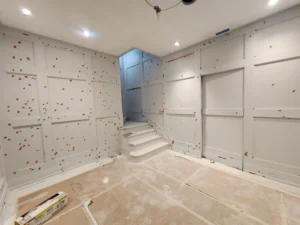
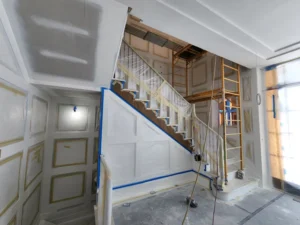
Crews typically start by setting up a central work area and reviewing how professional wall preparation will affect coverage and finish. This might be a garage, basement, or less-used room where tools, paint, and supplies can stay organized throughout the job. From there, attention shifts to protecting the spaces being painted.
Common first-day prep steps include:
- Covering floors, furniture, and fixtures in multiple rooms
- Removing or masking outlet covers, hardware, and trim details
- Addressing minor wall repairs so surfaces are ready for paint
- Creating clean pathways between rooms to avoid tracking dust or paint
Because several rooms are involved, prep can take longer than homeowners anticipate. This isn’t a delay—it’s what prevents messes, uneven results, and repeated setup later in the project.
You may notice painters moving between rooms without painting much at first. That’s intentional. By fully prepping all targeted areas early, crews can later rotate painting work without constantly stopping to protect new spaces.
By the end of the first day, your home may look temporarily more disrupted than improved. That’s normal. This foundation is what allows the actual painting phase to progress smoothly and consistently across all rooms.
How Work Moves From Room to Room During the Project
Once painting is underway, work rarely progresses in a straight, room-by-room line. Instead of finishing one space completely before starting another, crews usually rotate between rooms to keep the project moving efficiently.
This approach is driven largely by drying time. While one room’s walls or trim are curing, painters can shift to another space rather than waiting. In a multi-room project, this rotation prevents downtime and shortens the overall schedule.
You may notice patterns like:
- One room receiving a first coat while another gets a second
- Trim being painted in several rooms during the same phase
- Walls in lower-traffic areas being completed while main spaces dry
It can sometimes feel as though rooms are being started and abandoned. In reality, this sequencing is intentional and carefully planned. Each room has “active” periods where painting is happening and “inactive” periods where surfaces are drying or setting.
This rotation also helps maintain consistency. By applying the same products across rooms within the same time window, painters reduce variations in sheen or texture that can happen when work is spread too far apart.
Understanding this flow helps manage expectations. Progress is measured across the whole home, not by whether one specific room looks finished early on.
What Living in the Home During the Job Feels Like
Living in your home while multiple rooms are being painted is usually more manageable than people expect, but it does require some short-term adjustments. Most of the disruption comes from movement, temporary room closures, and changes to how you use certain spaces, rather than constant noise or chaos.
Painters are typically mindful that the home is still occupied. They’ll often work around normal routines, keeping pathways clear and coordinating access so essentials like kitchens, bathrooms, and bedrooms remain usable whenever possible. That said, there will be moments when specific rooms are off-limits while paint is drying or trim is being worked on.
Noise tends to come in bursts rather than all day. Sanding, prep, and cleanup are usually louder than the painting itself. Odors are generally contained and choosing the right low-odor paint can reduce discomfort, though you may still notice a mild smell during active work periods.
The biggest adjustment is psychological. Seeing furniture shifted, coverings in place, and multiple rooms in progress can make the home feel unsettled for a few days. Knowing this is temporary—and part of an organized process—helps reduce stress and makes the experience feel far more predictable.
How Progress, Touch-Ups, and Communication Are Handled
As a multi-room interior paint job moves forward, progress is tracked across the entire home rather than room by room. This helps crews keep quality consistent while making sure nothing is rushed or overlooked.
Painters typically monitor progress in a few key ways:
- Checking wall and trim surfaces under different lighting as coats dry
- Comparing finishes across rooms to ensure consistent color and sheen
- Identifying small imperfections early, before final coats are applied
Touch-ups are not saved only for the very end. Minor corrections often happen throughout the project, especially once multiple rooms have at least one finished coat. Addressing these issues as they appear prevents them from stacking up and slowing down the final walkthrough.
Communication plays a big role during this phase. Homeowners are usually updated on what was completed, what’s drying, and what’s coming next. If priorities shift—such as needing a room finished sooner than planned—those adjustments can often be made without disrupting the entire schedule.
This ongoing check-in process is what keeps the project aligned. Rather than waiting until the last day to address concerns, progress and quality are managed continuously so the final stages feel smooth and predictable.
What the Final Days Look Like Before the Job Is Complete
As the project nears completion, the pace and focus shift. Most major painting work is already finished, and attention turns to details that bring everything together across all rooms.
During this stage, crews typically focus on:
- Completing final coats where needed and allowing proper curing time
- Removing protective coverings and resetting furniture carefully
- Addressing any remaining touch-ups identified during earlier checks
- Cleaning painted surfaces, trim lines, and surrounding areas
This is also when the home starts to feel normal again. Rooms reopen, walkways clear, and the visual noise of drop cloths and tools disappears. While there may still be brief periods of activity, they’re usually shorter and more targeted than earlier in the project.
A final walkthrough is often scheduled once everything has fully dried. This gives homeowners a chance to see the finished work under normal lighting and point out anything that needs attention. Small punch-list items are common and expected, especially in multi-room projects where details can be easy to miss at first glance.
By the end of these final days, the project should feel cohesive. Instead of individual rooms standing out, the home looks refreshed as a whole, signaling that the job is truly complete.
Wrapping Up the Multi-Room Painting Experience
A multi-room interior paint job can feel intimidating at the start, but the full experience is usually far more structured and manageable than homeowners expect. When the project is planned as one coordinated effort, each stage builds logically on the last, from early preparation through final touch-ups.
The key takeaway is that progress doesn’t happen in a straight line. Rooms move in and out of active work, drying periods overlap, and the home shifts temporarily before settling back into place. That rhythm is intentional. It’s what allows multiple rooms to be painted efficiently while maintaining consistent results across the entire space.
Understanding this process ahead of time helps reduce stress. When you know why rooms are rotated, why prep takes time, and why certain spaces may be unavailable briefly, the project feels purposeful rather than disruptive. Instead of watching for one room to be finished, you can gauge progress by how the whole home is coming together.
If you’re planning interior painting multiple rooms at once and want clear expectations tailored to your layout and schedule, a professional walkthrough can make all the difference. Talking through the scope, sequencing, and daily flow ahead of time helps ensure the project fits your home and routine comfortably. That clarity is often what turns a big project into a smooth, predictable experience.
If you’re considering a multi-room interior paint project and want clear expectations from the start, we’re here to help. Our interior painting team walks you through the plan, timing, and daily flow before any work begins, so there are no surprises along the way. If you’d like to talk through your home, your priorities, and how we’d approach the project, we’re happy to set up a straightforward consultation and answer your questions.